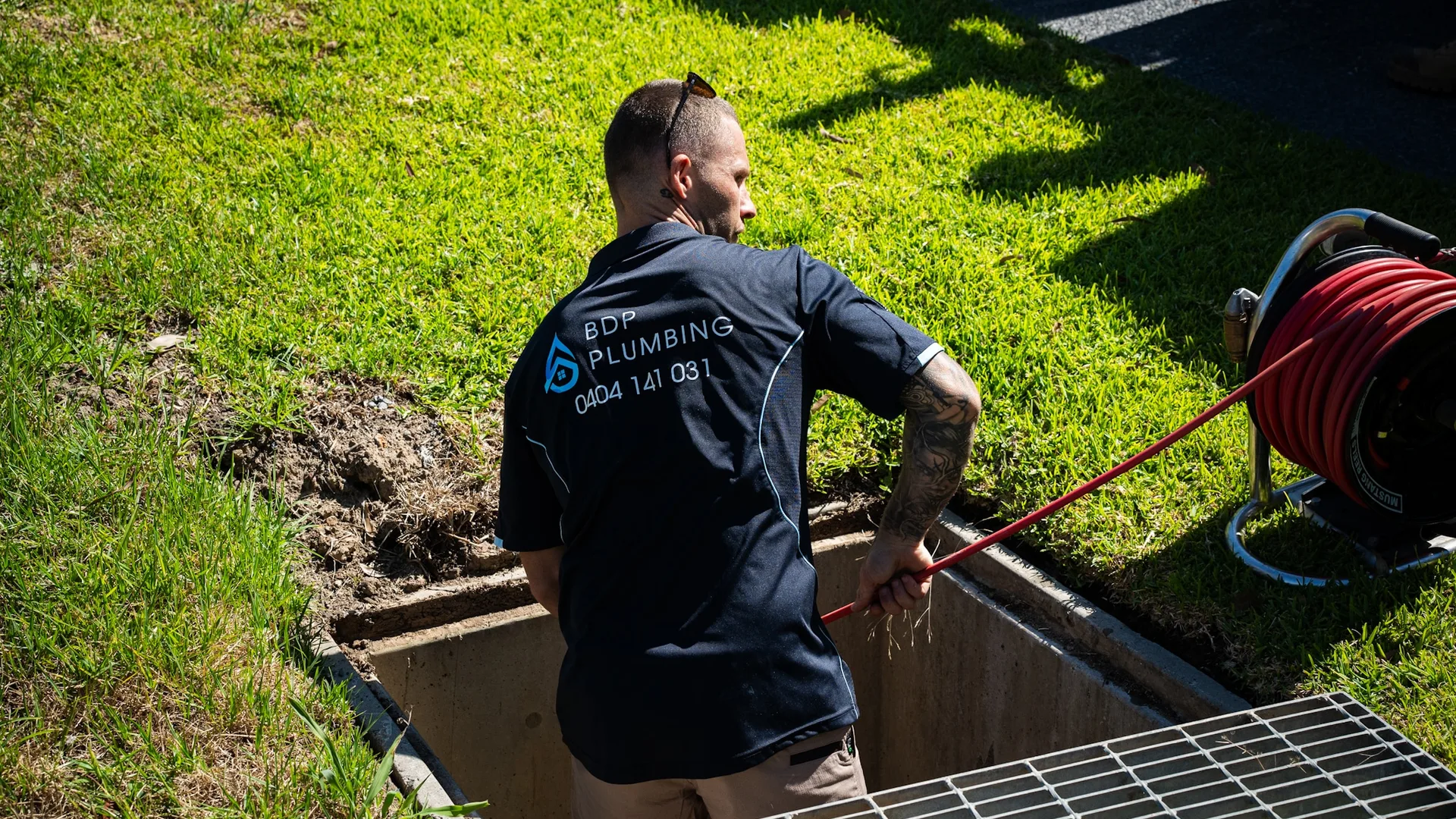
Drainage in Fletcher
Blocked Stormwater Fletcher
Stormwater trouble on a ridgeline block does not stay in the pipes for long. When a line surcharges, water runs to the lowest point on the lot, and that is often a garage slab or a back step.
We clear blocked stormwater lines, pits and gullies across Fletcher and the neighbouring suburbs, with the diagnosis done on the first visit. Everything sits under our drainage service, alongside blocked drains and blocked sewer work.
The short version. $0 call out, a quote before any work starts, and licensed plumbers on every job. Ring (02) 4063 3422 and tell us what the water is doing.
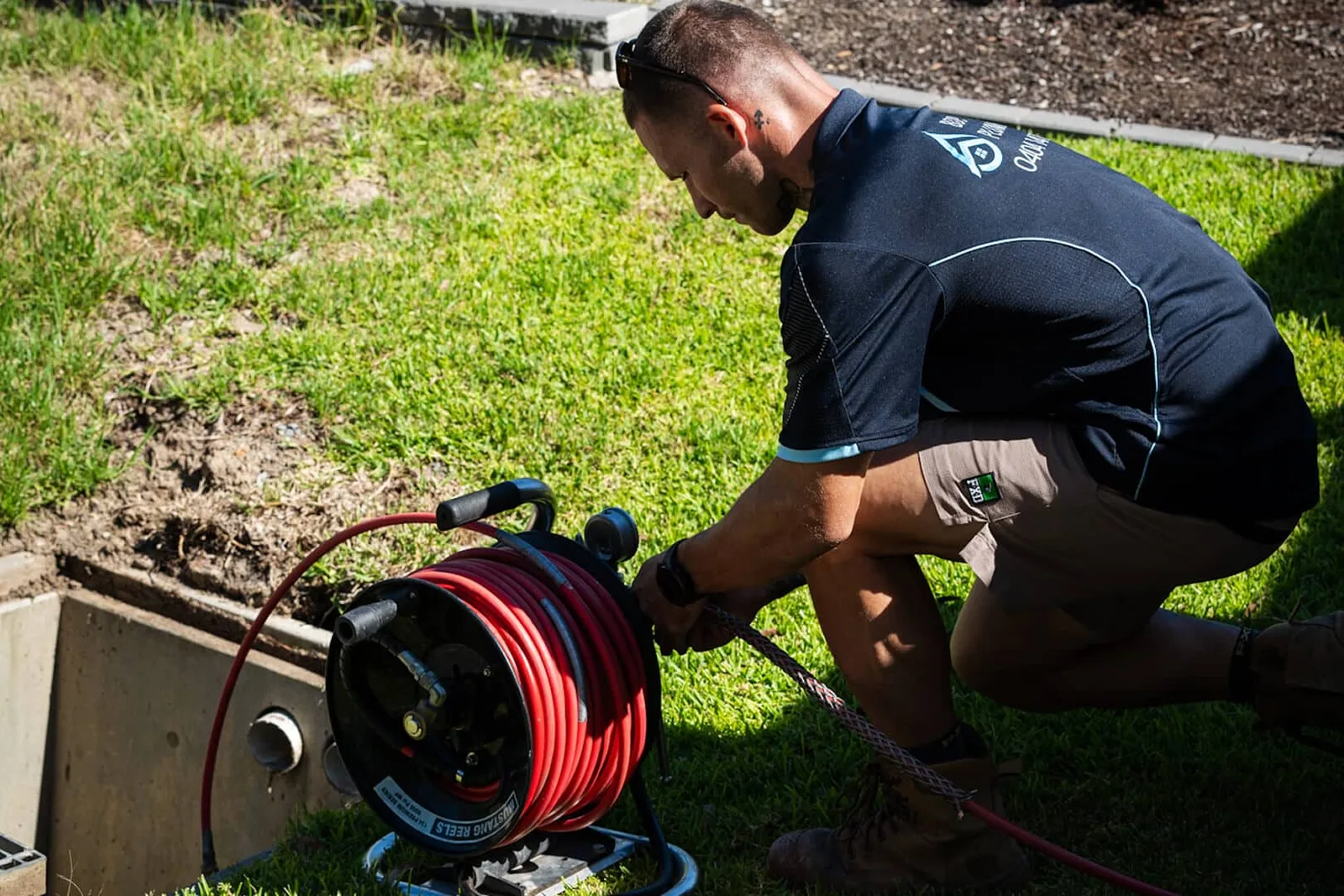
Signs your stormwater line is blocked
A stormwater problem announces itself in the rain. Watch for these:
- Pits or gullies that fill to the brim during ordinary rain instead of draining steadily
- Water pooling against the slab, in the garage or along a downhill fence line
- Downpipes overflowing at the joints where they meet the ground
- A gully that burps back water while the storm is still falling
- Ground that stays boggy long after everything else has dried out
One heavy burst is bad luck. The same pit backing up every time it rains means there is a restriction in the line, and it will not fix itself.
Why the ridge makes it worse
This suburb was built across undulating ridgeline ground near Nikkinba Ridge, and many estate lots fall steeply. That slope is the whole story for stormwater here. Three things stack up:
Steep lots shed water fast.
Cut-and-fill lots settle unevenly.
Clay pushes water instead of soaking it.
Streets like Kingfisher Drive and Crestview Street run across ground that falls hard toward the back boundary, so the gully at the low fence line cops everything the roof and yard send down.
Homes up along Nikkin Street sit closer to the crest, where the problem flips. Water arrives from uphill neighbours faster than a small pit can swallow it.
What we do on site
Every stormwater callout runs the same way:
Find where it surcharges
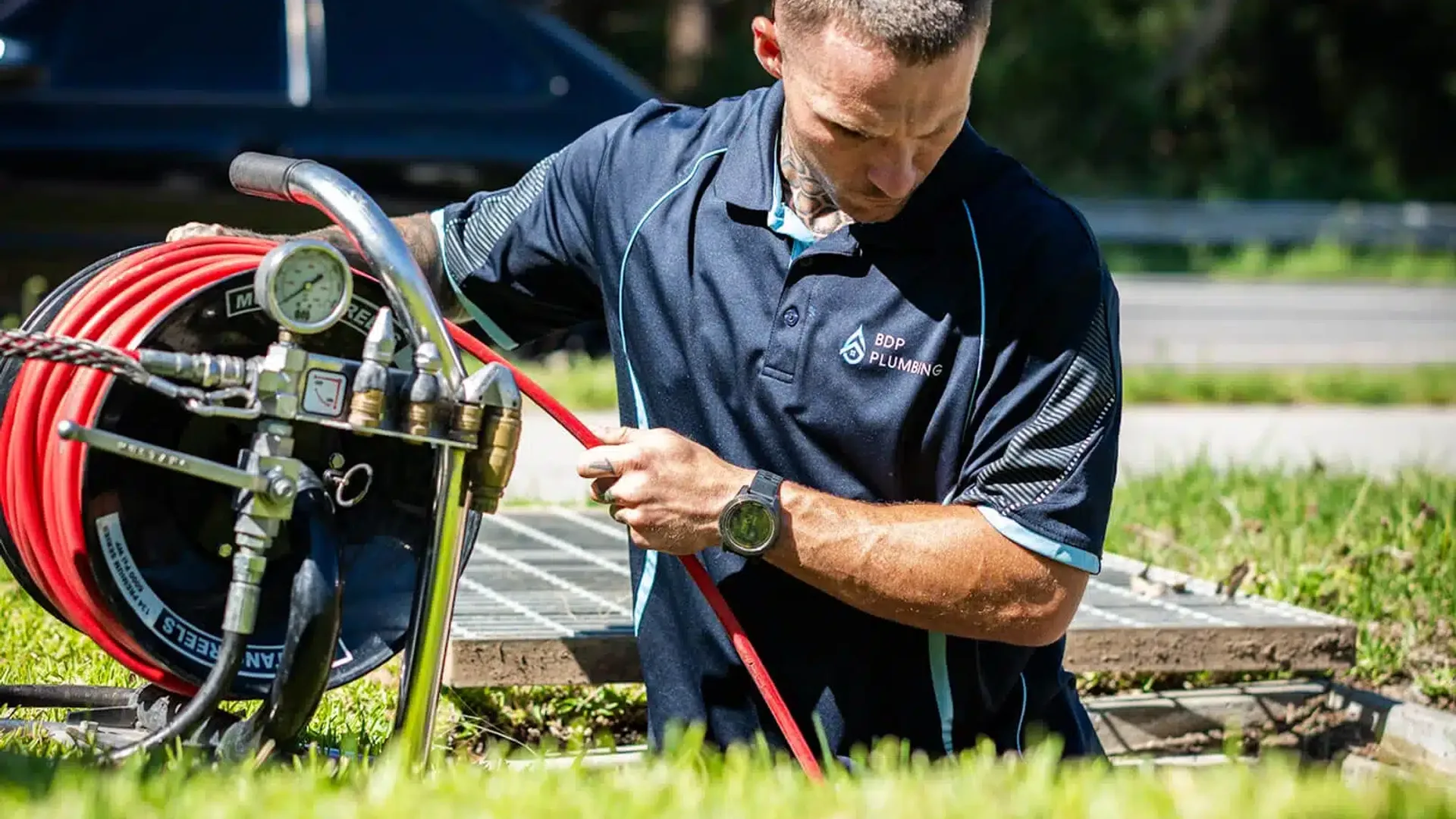
Clear through the pits
Camera the run if it repeats
Report what we found
If jetting shows the line needs a proper scour out rather than a spot clear, hydro jetting strips the buildup off the pipe walls instead of just punching a hole through it.
Stormwater, sewer or general drain?
Rain and sewage travel in different pipes, and the fix depends on which one is backing up.
- Stormwater surcharges when it rains and settles when it stops
- Sewer trouble ignores the forecast and announces itself by smell
- A single slow fixture is usually a blocked drain closer to the basin or pan
If a storm surge has already pushed water into the house, that is an emergency, and our emergency plumbing page covers what counts as urgent and what to do first. Burst pipes from storm damage get their own rundown on the burst pipes page.
Storm season is when it shows
Open-data snapshots put average rainfall here at 1,002mm a year, and a good chunk of it arrives in short summer bursts rather than gentle all-day falls. Those bursts are what overload estate stormwater systems built for average conditions. A line that handles a winter drizzle can surcharge within twenty minutes of a February downpour.
The gardens have grown up too.
So the pattern is predictable.
How the job runs
- 1
Call and tell us
Ring (02) 4063 3422 and tell us what's going on in Fletcher. We'll ask a few quick questions so the right gear is on the truck the first time.
- 2
Quote before work
You get the price before anything starts. No call-out fee, no hourly surprises, you approve the quote or we shake hands and leave, no charge.
- 3
Clear and confirm
We jet the line back from the pits, confirm full flow has returned, and camera the run whenever the blockage looks like more than debris.
- 4
Backed, no questions asked
If something isn't up to standard afterwards, we come back and make it right, no questions asked. That's the standard every Fletcher job is held to.
Blocked stormwater questions we get
How do I know it is stormwater and not the sewer backing up?
Rainwater surcharges during a downpour and settles once the weather clears. Sewer backups ignore the forecast and smell the part. If it only shows in wet weather, suspect the stormwater line.
Can a blocked stormwater line flood my house?
It can. On a steep block, a surcharged line pushes water to the lowest point, often a garage or slab edge. A pit that backs up every storm needs clearing first.
What usually blocks a stormwater line here?
Leaf litter and silt washed off steep driveways, roots from maturing estate gardens, and pipe runs settled into low spots on cut-and-fill lots. Clay soils make any partial blockage show fast.
Will you need to dig up my yard?
Usually not. Most stormwater blockages clear through pits and gullies with jetting gear. Excavation only comes up if the camera shows a collapsed section, and you get the quote before any digging starts.
How fast can you get here during a storm?
Same-day where the schedule allows, and heavy rain is exactly when surcharging stormwater calls jump the queue. Ring (02) 4063 3422 and we will tell you honestly where you sit in the run.
Should I wait for the rain to stop before calling?
No. Call while water is pushing up through pits or creeping toward the house. That is when the source is easiest to read, and clearing early keeps water away from floor levels.
Plumbers in Fletcher and the suburbs around it
Book a stormwater clear
Call (02) 4063 3422 and tell us what's happening. $0 call out across Fletcher, a clear quote before any work starts, and a job that gets made right if it isn't right the first time.